
The first attempts at etching with copper plates is complete. I think I really like the etching of the copper plates. If I had to pick one technique over all the ones we have tried this semester, I think it would be this one. To get our feet wet on the acid process. We started with 4 test plates, each one a different technique.
The first test plate was using sharpie marker as the resist for the copper plate. I had a little fun with circles on design for this test plate. I like the sharpie marker but like any of the techniques it has its limitations. I had some fine lines that I tried to create with the sharpie marker but some of the detail was lost when the plate was put into the acid. I think this was the plate where everything just started to click on how to think in negative so that you get the impression you want out of a relief or intaglio print.
Overall I was happy with the results from this first test plate. It was a good test plate to start and see what the capabilities of the copper plate etch with sharpie marker resist. It seems that the sharpie marker would be best with a graphic design.


The next test plate was a line etch with a hard ground. The hard ground was made from acrylic floor was mixed with a small amount of india ink. The india ink was used to add a slight tint to the ground so it was easier to distinguish between the copper plate and the hard ground. Next the plate was etched using an etching needle. I found this technique a little more challenging. It was a little difficult to tell when you removed the hard ground and when you were actually etching into the copper plate.
I could see this technique being used in specific situations where there is fine detail but it certainly wasn’t my favorite technique. I did not get the results from the plate that I was hoping for.


The third test plate was the soft ground. I really liked this technique. It allows you do easily get texture into a plate. Water based inked is first rolled onto the copper plate. Objects and materials with texture are laid over the ground and then the plate is ran through the printing press. The objects will make textural impression on the plate. These impression etched the plate while in the acid solution.
I enjoyed this technique, it was probably my favorite technique. It was fun to play with textures. This method has a great application for creating background for an image. I was happy with the results from this test plate.
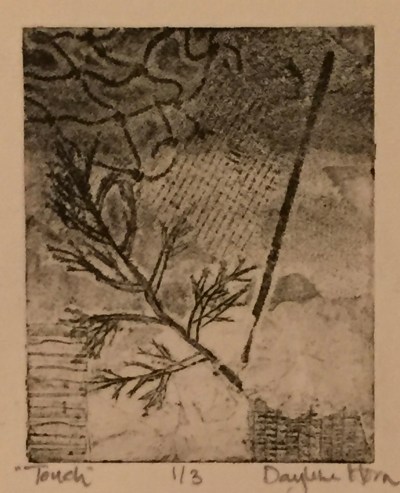
The last technique we experimented with was aquatint. This technique used spray paint to add a partial resist to the plate. At first, when this technique was described, I didn’t think I would like it. I think it was difficult to visualize at first how the varying times in the acid would create different tones on the plate.
I think this technique definitely has possibilities and can add to an etch image. I liked the results with this plate, especially considering I had no preconception when I started this image, I think it turned out not too bad.

The final project was an 8×10 image that used a minimum of 2 etching process and a minimum of 3 acid dips. I decided to used line etch, aquatint and the soft ground technique for the final project.
The line etch was the first process I used. On my first dip, I got a huge lesson in the unpredictability of the acid. In the first step, the hard ground that I used was broke down and the entire plate was exposed to the acid. I had put a lot of work into the line etch, so naturally I was a little frustrated. There was a little beginners luck on my side here, because I had actually etched into the copper and not just the ground, the lines in the plate were light but they were there, whew lucked out on that one. I think this is something I really like about printmaking, it that there is nothing exact so when things don’t go quite as planned you just have to figure it out and move on.

The next step was the aquatint. This part of the project went as planned, I used contact paper as a resist for next acid dip. This seemed to go without a hitch.

The final step was to add the soft ground. Again, I used the contact paper to block out any areas that were to remain unaffected by the acid. There were some intricate shapes in the contact paper were pulled off in the process of rolling the soft ground with a brayer. Again, a lucky accident. It ended up creating some gradient tones in the soft ground so the detail in the image wasn’t completely lost.

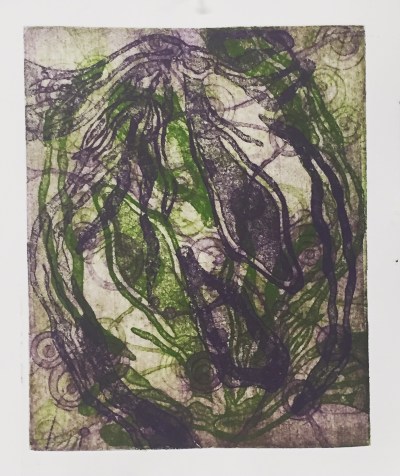

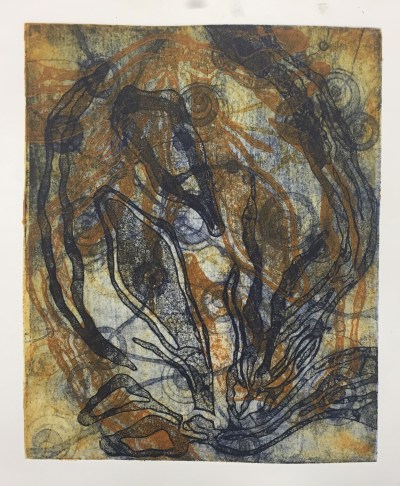
I was mostly happy with the results of the plate. It was difficult to get a clear print or it wasn’t what I had envisioned. It was difficult to get a clear and crisp print because of the breakdown of the ground on the line etch.
The copper etch and intaglio printing is my favorite technique from the printing class this semester. The possibilities with etching and the intaglio process are endless. I enjoyed all the parts of this process from planning the image, what processes to use to get the result you want, executing the etch, and the technical aspects of printing the image.
 Daylene Horn Art