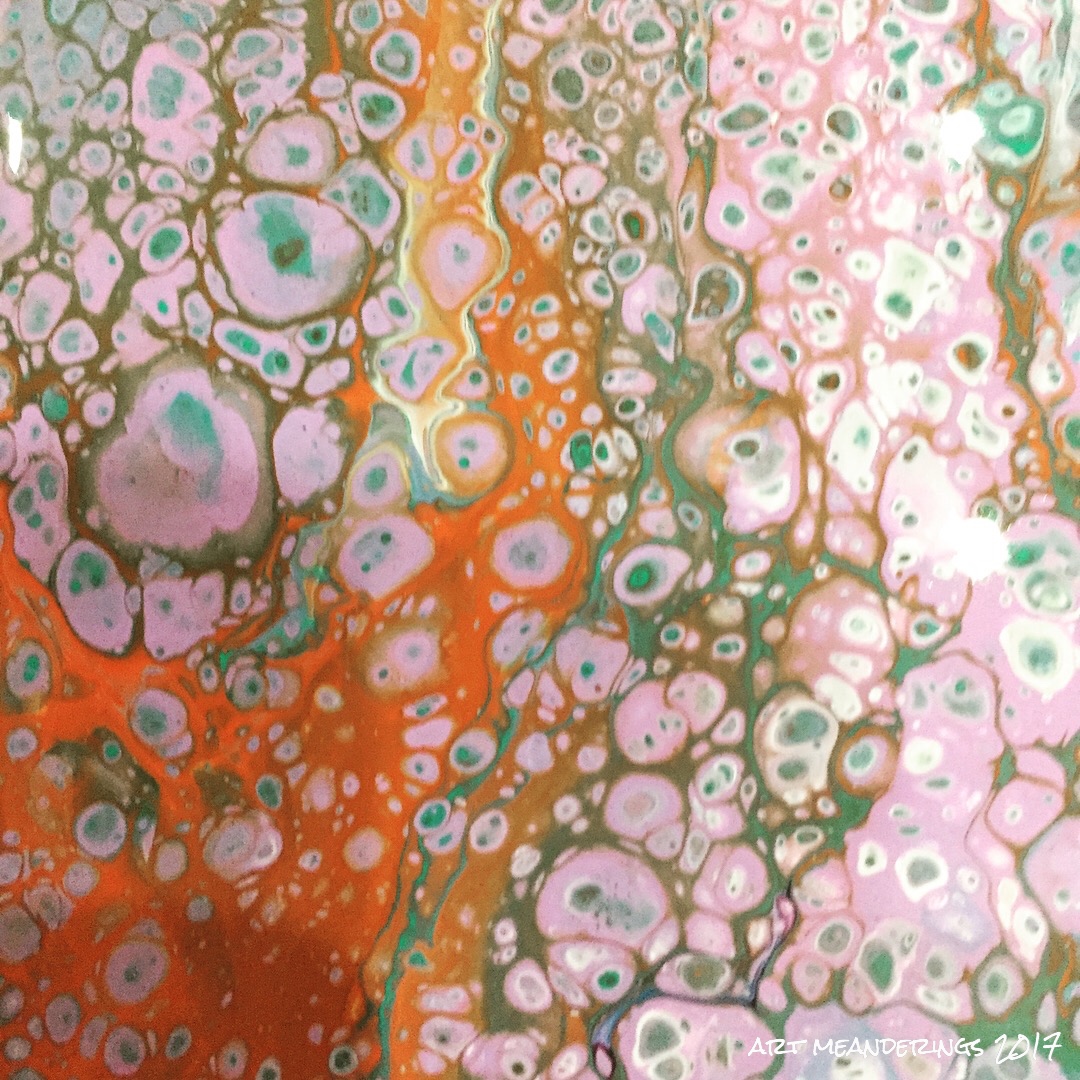
Social media seems to be a part of our everyday lives these days. It brings some good and bad things to our phone and desktop In this case, it was something good. I stumbled across acrylic pouring one day as I was doing some mindless surfing. I have been watching all the acrylic artists out there doing their beautiful acrylic pourings for some time. It all looked like so much fun and I recently got to give it try and I have to say it did not disappoint. I am hooked! It is so much fun especially if you are a process artist. I am learning through some of the places this creative journey takes me that I am definitely a process artist. Now don’t get me wrong everyone loves to end up with something that is visually appealing or meets the vision that they set out with but there is so much more to art than the final product. It is about the journey and being able to express your soul.
I recently when on a retreat to the country for some long needed downtime from the world with a dear friend. It so happens we are both the creative types and we decided to lock ourselves in her art studio and see what we could figure out with the acrylic pouring. We spent the best part of three days tackling this new technique. Over the course of three days we poured on just about every flat surface we could find : canvas, wood scraps, tin and metal scraps, and vinyl records. Over the course of the three days we did over 40 paintings and experiments, wow right?!?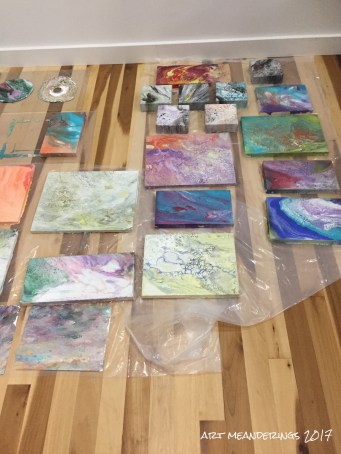
Day 1
The first day we were really just discovering what it was all about and the recipe for the paint needed to be. The first day we were just really thinning the paint with water and adding silicone. We were using the dirty pour technique for our experiments.The first painting we did, it was quite obvious we did not have the right recipe. The paint was pouring very slow over the support and we weren’t getting the beautiful cells that we saw in so many of the videos on social media.


The next few we increased the silicone and thinned that paint a little more with water. We started getting better results but a mix of really small and large cells in the pours but we could get anything consistent. We also tried adding heat but still nothing consistent, if anything it seemed to compound the issues we were having. At the end of the first day, we weren’t very happy with the results. We got a few good pours but we knew we just didn’t have it down but we were determined to figure this out.
Day 2
We could hardly wait to get in the studio that next day. We were very eager to experiment some more and try and figure this out. We had stumbled upon video of someone that was sharing their recipe for their pours. It was 1 part paint:1 part alcohol:2 parts Floetrol. Then we had a spray silicone that we were using to add to the paints, the video we got the recipe from recommended 3-4 drops of silicone per ounce of paint. Try to figure out drops of silicone with a spray application. Now it seemed like we were getting somewhere. The paint was a much better consistency and flowed so much better than the first day but there was still something not quite right. We still didn’t have it quite right. We were still getting really mixed results. Sometimes we were getting the results we wanted and other times not. We both thought it had to do with the silicone application. We tried the silicone several ways: silicone in each color, silicone is some of the colors, silicone at the top of the dirty pour cup. We came to the conclusion that we should try using a silicone oil and spray. Day 2 produced better results but as the paint dried we noticed that the paint was crazing. The paint was too thick.
Day 3
On our last day of experimenting we were a little more methodical, trying to get the recipe just right. We measured precise that day and changed from spraying the silicone to adding it with a dropped so we could control the silicone additive a little better. Again we tried the silicone in different doses and in different orders trying to get the recipe just right. We decided to try the silicone at the top of the pour cup instead of mixed in the paint, at last, success! We were getting some good pours with decent and somewhat consistent cells. We ended up with about 40 paintings over the three days.
We both agreed that the best part of the whole process is the second you lift the cup off the support and watched all the colors mix. It is almost an ah ha moment!
It is a very cool technique. My brain is constantly thinking of how I can incorporate this technique into my artwork. A very cool technique and it definitely will NOT be the last time I do this. It is so good to experiment and try new things. I think one of coolest things about these three days was learning something new with my friend building memories and also feeding the soul, as creatives we have to seek out other creatives.
Happy creating!


 Daylene Horn Art